Why Your "Clean" Home Might Be Making You Sick (And How to Fix It)
Pillar One: Filtration (Stop Buying the Cheapest Filter)
The air filter is your system's first line of defense. Unfortunately, most homeowners treat it as an afterthought, buying the cheapest 1-inch fiberglass filter they can find at the grocery store.
The "Rock Catcher" Problem
Cheap fiberglass filters are often called "rock catchers" in the industry. They have a loose weave that stops big things (like a lost Lego or a giant dust bunny) from hitting the fan motor, but they let the microscopic stuff—pollen, bacteria, smoke—pass right through.
Understanding MERV Ratings
Filters are rated on the MERV scale (Minimum Efficiency Reporting Value), ranging from 1 to 16.
- MERV 1-4: Fiberglass. Protects the equipment, not you. (Avoid).
- MERV 5-8: Pleated filters. Good for dust and mold spores. The residential standard.
- MERV 11-13: High efficiency. Captures pet dander, smog, and virus carriers. This is the target for allergy sufferers.
- MERV 16+: Hospital grade (HEPA). Captures bacteria and viruses.
The Upgrade: Media Cabinets
If you try to shove a thick MERV 13 filter into a standard 1-inch slot, you might choke your system (restricting airflow and freezing your coil).
- The Solution: We install a 4-inch or 5-inch Media Cabinet.
- The Benefit: These filters are massive. They have significantly more surface area, which means they can trap tiny particles without restricting airflow. Plus, you usually only have to change them every 6-12 months instead of every 30 days.
Pillar Two: Humidity Control (The Winter Defense)
In January and February, the air in the NRV gets bone dry. Cold air cannot hold moisture. When your furnace heats that dry air, the Relative Humidity (RH) inside your home can drop below 15%. For context, the Sahara Desert is about 25%.
Why Dry Air is Dangerous
- Health: Your nose and throat are lined with mucous membranes that trap viruses. Dry air dries out these membranes, cracking your natural defense system. This is why "flu season" coincides with "dry air season."
- The House: Your home is built of wood. Wood is a sponge. In dry air, it shrinks. This causes hardwood floors to gap, trim to separate from the wall, and expensive furniture to crack.
- Comfort: Dry air feels colder. You have to turn the thermostat up to 72°F to feel as warm as you would at 68°F with proper humidity.
The Solution: Whole-Home Humidifiers
Forget the little portable units that you have to fill with water every night.
- How it works: We install a humidifier (like an Aprilaire) directly onto your furnace or air handler ductwork. It is plumbed into your water line.
- The Automation: It has an outdoor sensor. It automatically calculates the perfect amount of moisture to add to the air stream to maintain a healthy 35-45% humidity level throughout the entire house.
Pillar Three: Active Purification (Killing the Bugs)
Filtration traps pollutants. Purification kills them. If you are worried about mold, odors (pets/cooking), or viruses (COVID/Flu), you need active purification.
UV Lights (The Coil Scrubbers)
Inside your HVAC system, there is a "coil"—a radiator that gets wet with condensation in the summer. Dark, cool, and wet places are breeding grounds for mold.
- The Tech: We install a high-intensity Ultraviolet (UV-C) Light inside the duct, shining directly on the coil.
- The Result: It sterilizes the surface, preventing mold slime from growing and blowing spores into your home.
Air Scrubbers (The Space Age Tech)
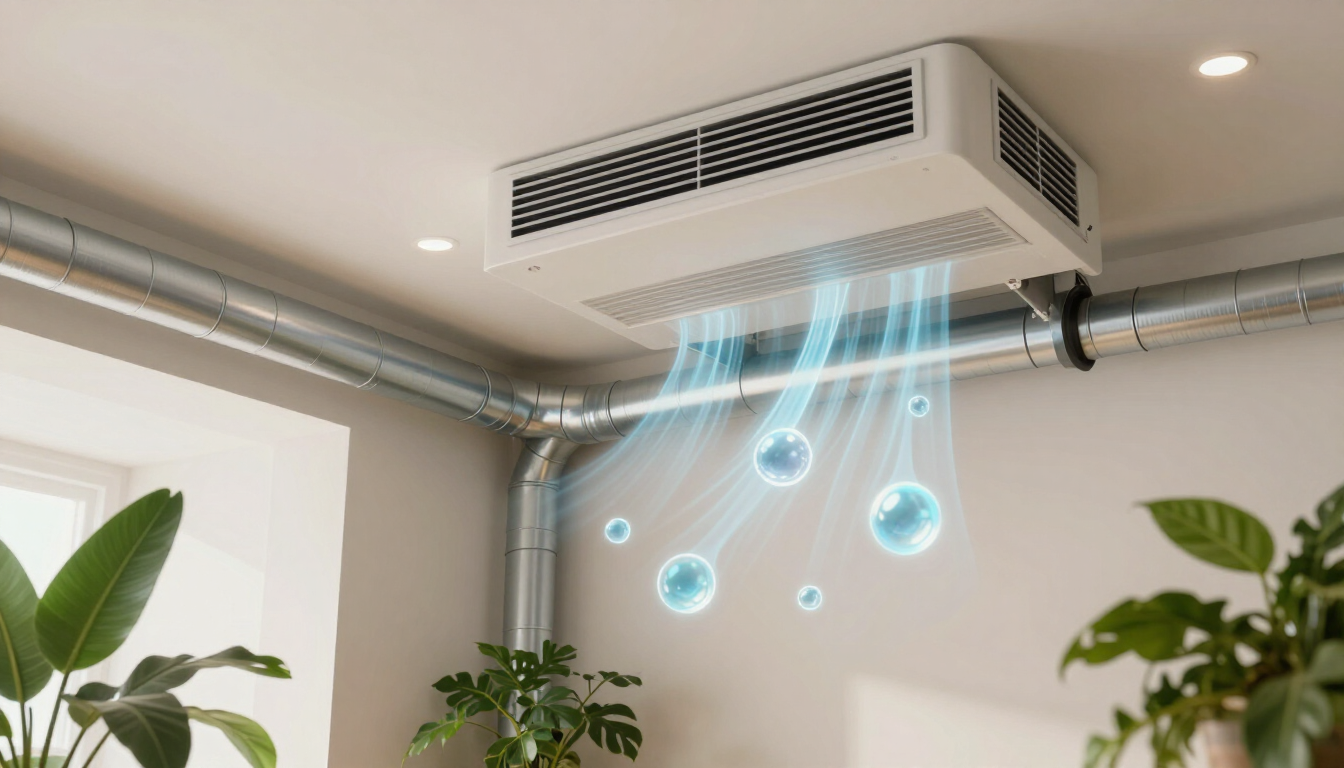
This is the next level. Devices like the Air Scrubber by Aerus use technology originally developed by NASA.
- How it works: It creates "oxidizers" (hydrogen peroxide molecules) and releases them into the air stream.
- The Reach: These molecules float out into your rooms and actively hunt down contaminants. They kill bacteria on surfaces—like your doorknobs and countertops—not just in the filter.
- The Bonus: It is incredible at eliminating odors. If you burn popcorn or have a wet dog, an Air Scrubber clears the smell in minutes.
The Ductwork: The Delivery System
You can have the best heat pump and the best filter, but if your ductwork is dirty or leaky, it doesn't matter.
Leaky Ducts = Dirty Air
In many older homes (and some new ones), ductwork runs through unconditioned spaces like attics or crawlspaces.
- The Physics: If you have a hole in your return duct in the attic, your system sucks in attic air—full of fiberglass insulation dust and rodent droppings—and blows it into your bedroom.
- The Fix: We offer duct inspections and Duct Sealing. We use mastic and specialized tape to ensure the only air moving through your system is the air you want.
Duct Cleaning: When to Do It?
There is a lot of snake oil in the "duct cleaning" industry. You don't need it every year.
- When to call us:
- Post-Renovation: If you just did a remodel and there was drywall dust everywhere.
- New Home Purchase: You don't know how the previous owners lived (pets, smoking).
- Visible Mold: If you see growth inside the vents. We use high-powered agitation tools and truck-mounted vacuums to physically remove the debris, not just blow it around.
Conclusion: Take a Deep Breath
Your home should be a safe haven. If you are waking up congested, seeing excessive dust on your furniture, or battling static electricity all winter, your Indoor Air Quality needs attention.
At Air Tech Heating & Cooling, we treat the whole system—the equipment, the ducts, and the air itself.
Ready to breathe easier?
Contact Air Tech today for an IAQ assessment. We can measure your humidity, check your filters, and recommend a custom solution for your family’s health.