The Ultimate Guide to Indoor Air Quality: Breathe Easier in the New River Valley

April 14, 2026
When we think about air pollution, we immediately picture smoggy city skylines, factory smokestacks, and heavy exhaust fumes from highway traffic. Because we associate pollution with the outdoors, we naturally view our homes as safe, clean sanctuaries. When the pollen counts in the New River Valley skyrocket during the spring, or when the winter air turns freezing and bitter, we retreat inside, lock the doors, and close the windows to protect ourselves.

But what if the air inside your house is actually worse than the air outside?

According to the Environmental Protection Agency (EPA), indoor air can be two to five times—and occasionally up to 100 times—more polluted than outdoor air. Over the last few decades, home construction has prioritized energy efficiency. We seal every crack, weatherstrip every door, and heavily insulate our attics to ensure we don't waste expensive heating and cooling.

While this "tight home" construction saves you money on your utility bills, it creates a massive unintended consequence: it completely traps airborne contaminants inside. Your home essentially acts like a sealed plastic bag, continuously recirculating dust, allergens, viruses, and chemical off-gassing through your HVAC ductwork.

At Air Tech Heating & Cooling, we believe that true comfort is about more than just temperature control; it is about the purity and health of the air your family breathes every single day. With over 15 years of experience serving Christiansburg, Blacksburg, and Radford, we have helped countless families turn their homes into true clean-air sanctuaries.

If you wake up with a stuffy nose, suffer from dry winter skin, or constantly battle dust on your furniture, this comprehensive guide will explain the invisible threats floating in your home and the high-tech HVAC solutions designed to eliminate them.

 The Invisible Threats 

To effectively clean your air, you must first understand exactly what is contaminating it. Indoor air pollution is generally broken down into three distinct categories:


1. Particulates (The Visible Annoyances)

These are the physical particles floating in the air that eventually settle on your coffee table and bookshelves. They include household dust, pet dander, microscopic dead skin cells, pollen tracked in from the Virginia outdoors, and dirt. While they are irritating and trigger asthma, they are the easiest contaminants to capture.


2. Biological Contaminants (The Living Threats)

This category includes living microscopic organisms. Your dark, damp ductwork and the condensation pan inside your air conditioner are prime breeding grounds for mold spores, mildew, and bacteria. When your HVAC fan kicks on, it blasts these living spores directly into your living spaces. This category also includes airborne viruses (like the common cold or flu) that recirculate when a family member gets sick.


3. Volatile Organic Compounds (VOCs)

VOCs are invisible, toxic gases that off-gas from everyday household products. The "new carpet smell," the fumes from chemical cleaning supplies, aerosol hairsprays, and even the paint on your walls constantly release low-level chemical vapors into your tightly sealed home. Prolonged exposure to VOCs causes chronic headaches, fatigue, and respiratory irritation.

The Myth of the 1-Inch Filter

When homeowners want to improve their air quality, they usually go to the local hardware store and buy the most expensive, densely pleated 1-inch fiberglass air filter they can find.


This is a critical mistake.


The standard 1-inch air filter inside your return vent was never designed to clean the air you breathe. Its sole engineering purpose is to catch massive chunks of dust and hair before they get sucked into your furnace and destroy the blower motor. It is there to protect the equipment, not the humans.


If you buy a high-MERV (dense) 1-inch filter, the microscopic pores are so tight that your HVAC blower motor has to work twice as hard to pull air through it. This suffocates your system, drastically raising your energy bills, freezing your AC coils, and prematurely burning out your expensive HVAC motor.

The True Solutions

To genuinely clean your air without destroying your HVAC system, you need professional-grade solutions integrated directly into your ductwork. We attack poor indoor air quality using a two-pronged approach: Catch it, and Kill it.


1. Heavy-Duty Media Filtration (Catch It)

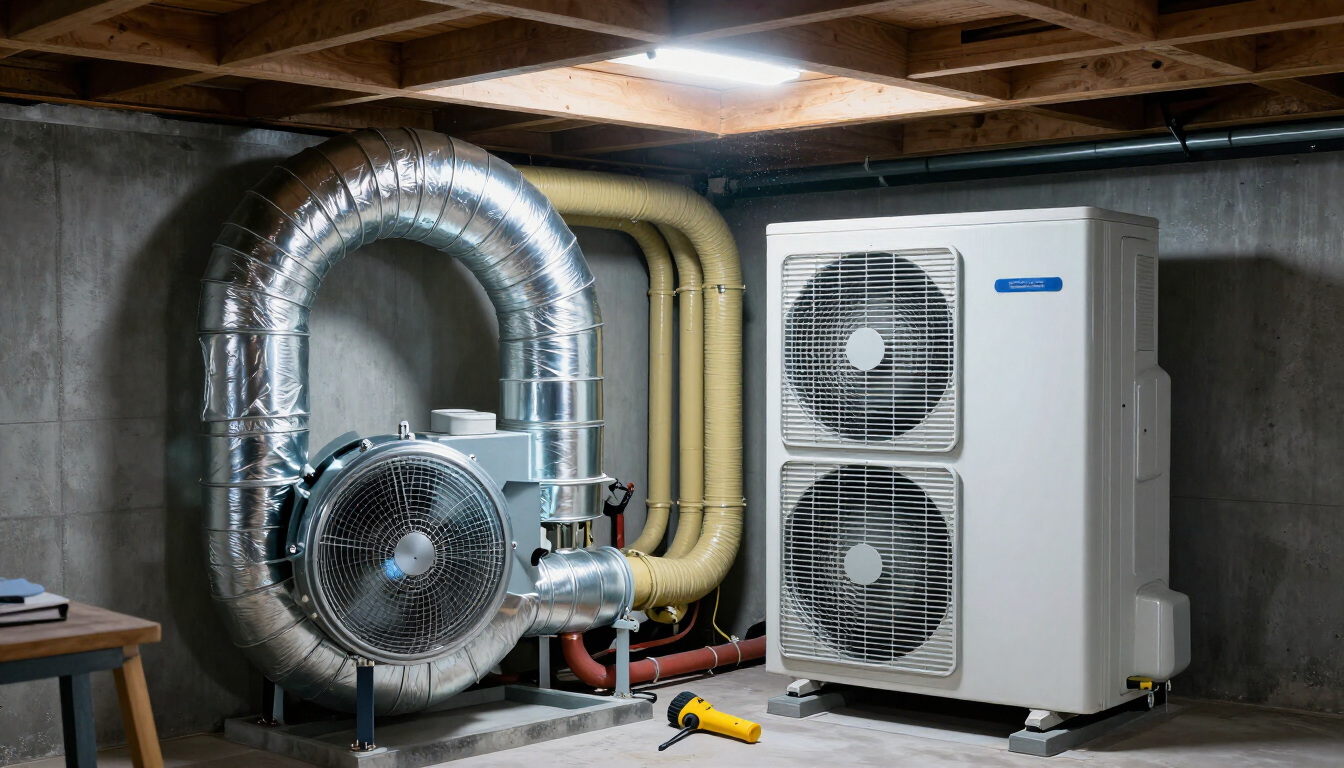
Instead of a restrictive 1-inch filter, we install a massive 4-inch or 5-inch thick Media Air Cleaner directly into the ductwork next to your furnace. Because these filters are five times thicker, they have a massive amount of surface area. This allows them to easily capture microscopic pollen, pet dander, and fine dust without restricting the vital airflow your system needs to survive. You only need to change them every 6 to 12 months, and they keep your home exponentially cleaner.


2. UV-C Light Purification (Kill It)

While a filter catches physical dirt, it cannot stop a virus or neutralize a toxic VOC gas. For that, we turn to the power of ultraviolet light.

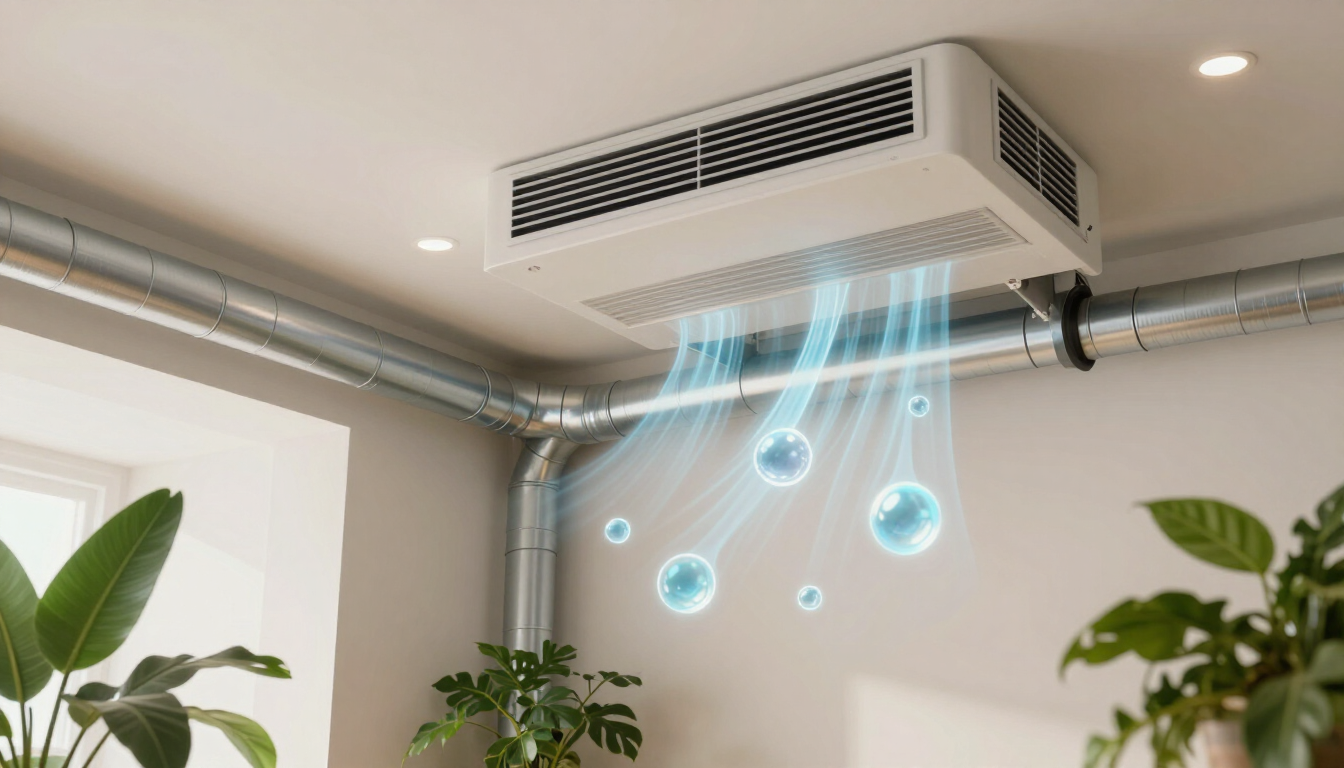
We install a specialized UV-C purification lamp directly over the indoor cooling coil of your HVAC system. As the air blows past the light, the intense UV rays scramble the DNA of mold spores, bacteria, and viruses, rendering them completely harmless. This technology is identical to the sterilization systems used in modern hospital operating rooms, and it ensures that the air circulating through your home is biologically pure.

 Mastering Humidity Control

Temperature is only half of the comfort equation; humidity plays a massive, often ignored role in your home's air quality and your family's health.


The Winter Drought (Whole-Home Humidifiers)

When the temperature drops in the New River Valley, the air loses its ability to hold moisture. When your gas furnace runs, it dries the air out even further. If your home's humidity drops below 30%, you will experience painful static shocks, cracked hardwood floors, dry, itchy skin, and bloody noses. Worse, airborne viruses thrive and travel much farther in bone-dry air.

  • The Solution: We install a Whole-Home Bypass Humidifier directly onto your furnace. It automatically introduces perfectly calibrated water vapor into your ductwork, keeping your home at a comfortable, healthy 45% humidity all winter long.


The Summer Swamp (Whole-Home Dehumidifiers)

Conversely, Virginia summers are notoriously humid. If your home's humidity climbs above 60%, your house will feel clammy and sticky. High humidity forces your AC to work overtime and creates the perfect damp environment for toxic mold to rapidly grow inside your walls and basement.

  • The Solution: If your AC alone cannot handle the moisture, we integrate a dedicated Whole-Home Dehumidifier into your system. It pulls gallons of excess water out of the air before it ever reaches your vents, allowing you to feel incredibly cool and comfortable even if you set your thermostat a few degrees higher.

Transform Your Home with Air Tech Heating & Cooling

You spend roughly 90% of your life indoors. You shouldn't have to constantly battle seasonal allergies, dust your furniture every single day, or worry about the health of the air your children are breathing while they sleep.


Upgrading your home’s Indoor Air Quality is an investment in your long-term health and daily comfort.


For over 15 years, Air Tech Heating & Cooling has been the premier, family-owned HVAC contractor in the New River Valley. We do not push generic, one-size-fits-all products. We will thoroughly evaluate your home’s specific layout, your existing ductwork, and your family's specific allergy concerns to design a custom, high-efficiency IAQ system that genuinely works.


Backed by our Best Price Guarantee and flexible financing options (subject to credit approval), pristine indoor air has never been more affordable.

Take a deep breath of relief. Contact Air Tech Heating & Cooling today at (540) 251-3131 or fill out the contact form on our website to schedule your free, no-obligation Indoor Air Quality consultation. Let us help you create the ultimate healthy home!
April 6, 2026
If you have lived in the New River Valley for more than a year, you are intimately familiar with our wildly unpredictable weather. We experience the absolute extremes of every season. We have sweltering, 90-degree July afternoons, and we have bitter, single-digit January nights where the Blue Ridge Mountains are blanketed in ice and snow. Because our climate demands so much from our home comfort systems, choosing the right heating equipment when it is time for a replacement is a massive financial and lifestyle decision. For decades, the great debate in Virginia HVAC has centered around two primary contenders: the traditional gas furnace and the electric heat pump. If you ask five different neighbors which system is better, you will likely get five different, highly opinionated answers. The truth is, there is no one-size-fits-all "best" system; there is only the best system for your specific home and energy setup. At Air Tech Heating & Cooling, we have spent over 15 years designing and installing high-efficiency heating solutions across Christiansburg, Blacksburg, and Radford. We don't believe in aggressive sales pitches; we believe in educating our customers. In this comprehensive guide, we will break down exactly how both systems operate, their unique pros and cons, and introduce you to the ultimate "best of both worlds" hybrid solution.
April 1, 2026
We see it every year. The first truly cold night of winter hits the New River Valley. The temperature drops to 15°F. And the next morning, our phones at Air Tech Heating & Cooling ring off the hook. "My heat stopped working." "It’s making a loud banging noise." "I smell something burning." When our technicians arrive, we often find a system that hasn't been touched by a professional in five or six years. The filter is clogged, the coil is impacted with dirt, and a $20 capacitor has failed, taking the $2,000 compressor down with it. There is a pervasive myth among homeowners that HVAC maintenance is just an "upsell"—a way for companies to make money when nothing is wrong. We call this the "If It Ain't Broke" Fallacy. The reality? Your HVAC system is the most expensive mechanical appliance in your home. It runs for roughly 2,000 to 3,000 hours a year. (If you drove your car for that many hours at 45 mph, you’d travel over 100,000 miles). You wouldn't drive your car 100,000 miles without an oil change. Why do you treat your furnace that way? In this guide, we are going to break down exactly what happens during a "Tune-Up," why manufacturers mandate it, and how skipping it is secretly draining your bank account every single month.
March 30, 2026
Living in the New River Valley means experiencing the absolute extremes of all four seasons. From the sweltering, humid afternoons of a Southwest Virginia summer to the bone-chilling, icy depths of a mid-January winter storm, your home’s heating and cooling system is constantly working behind the scenes. In fact, next to your roof, your HVAC system is arguably the hardest-working and most expensive mechanical component of your entire property. Yet, despite its critical role in keeping our families safe and comfortable, most homeowners in Christiansburg, Blacksburg, and Radford treat their HVAC systems with a "run it until it breaks" mentality. We adjust the thermostat, expect perfect air to flow from the ven ts, and completely ignore the complex machinery in the basement or outside until it suddenly stops working on the hottest or coldest day of the year. At Air Tech Heating & Cooling, we have spent over 15 years responding to these frantic, late-night emergency calls. In almost every single case, the catastrophic breakdown could have been entirely prevented with routine, professional care. If you want to maximize the lifespan of your equipment, lower your monthly utility bills, and completely eliminate the stress of sudden system failures, this comprehensive guide will explain exactly why enrolling in a professional HVAC Maintenance Plan is the smartest financial decision you can make for your home.
March 24, 2026
If you own a home in the New River Valley, you are probably familiar with the eternal thermostat battle. You set the central air conditioning to a comfortable 72 degrees, only to find that the upstairs master bedroom is sweltering while the downstairs living room feels like a walk-in freezer. For decades, homeowners in Christiansburg, Blacksburg, and Radford have accepted this uneven heating and cooling as simply a quirk of living in an older home or having a complex floor plan. We pile on extra blankets in the winter and buy noisy window AC units in the summer just to make certain rooms bearable. But what if you didn't have to cool your entire house just to make one room comfortable? What if every single member of your family could have their own personal thermostat? Welcome to the revolution of zoned HVAC technology. Ductless mini-split systems are rapidly becoming one of the most popular home improvement upgrades in Southwest Virginia, completely changing the way we think about indoor comfort. At Air Tech Heating & Cooling, we have spent over 15 years designing and installing high-efficiency heating and cooling solutions. As proud installe rs of industry-leading brands like Mitsubishi, we have seen firsthand how these sleek, whisper-quiet systems solve the most frustrating temperature issues. If you are tired of battling your thermostat and paying to heat or cool empty rooms, this comprehensive guide will explain exactly how ductless technology works, its incredible financial benefits, and how to determine if a mini-split is the right solution for your Virginia home.
March 16, 2026
As March rolls through the New River Valley, the landscape undergoes a stunning transformation. The barren trees of winter finally begin to bud, the Blue Ridge Mountains regain their lush greenery, and the residents of Christiansburg, Blacksburg, and Radford eagerly anticipate warmer afternoons. However, for millions of people, this beautiful seasonal shift triggers an annual nightmare: spring allergy season. If you live in Southwest Virginia, you are intimately familiar with "The Pollening"—that distinct period when a thick coating of yellow pine and oak pollen seems to cover every car, patio, and driveway in sight. While you might expect to sneeze when you step outside, your home is supposed to be your safe haven. But what happens when your eyes are itchy, your throat is scratchy, and your nose is running while you are sitting in your own living room? According to the Environmental Protection Agency (EPA), indoor air can be two to five times more polluted than the air outside. Because our modern homes are built to be tightly sealed for energy efficiency, they inadvertently trap a massive concentration of microscopic pollutants indoors. At Air Tech Heating & Cooling, we believe that true home comfort is about much more than just hitting the right temperature on your thermostat; it is about the purity of the air you breathe. With over 15 years of experience serving the NRV, we have helped countless families turn their homes into allergy-free sanctuaries. In this comprehensive guide, we will break down exactly what is lurking in your indoor air and how professional HVAC solutions can help you breathe easier this spring.
March 12, 2026
Imagine this scenario: It is a brisk Tuesday morning in Christiansburg. Your alarm goes off, and you head straight for the shower to start your day. But because your teenager took an extra-long shower just twenty minutes prior, you are greeted by an icy blast of water. Sound familiar? For decades, families across the New River Valley have simply accepted the limitations of traditional, storage-tank water heaters. We have structured our morning routines around them, staggered our laundry loads, and crossed our fingers hoping the tank wouldn't suddenly burst and flood the basement. But as home technology continues to evolve rapidly, you no longer have to settle for the old way of doing things. Enter the tankless water heater. Often referred to as "on-demand" water heaters, these sleek, highly efficient wall-mounted units are completely revolutionizing how homeowners in Blacksburg, Radford, and Christiansburg access hot water. At Air Tech Heating & Cooling, we have spent over 15 years helping our neighbors upgrade their home comfort systems, and tankless water heating is rapidly becoming one of our most requested services . If you are tired of paying to heat water you aren't using, or if your old 50-gallon tank is nearing the end of its lifespan, this comprehensive guide will walk you through exactly how tankless technology works, its massive benefits, and how to determine if it is the right investment for your Virginia home.
March 10, 2026
As the calendar turns to March and we begin to shake off the chill of winter, the New River Valley undergoes a beautiful transformation. The dogwoods start to bud, the days grow noticeably longer, and the sharp winter winds give way to warmer, sunnier afternoons. However, if you have lived in Christiansburg, Blacksburg, or Radford for any length of time, you know that springtime in Virginia is notoriously unpredictable. We can easily experience a freezing morning frost and a sweltering 80-degree afternoon within the exact same week. This rapid fluctuation in temperature asks a lot of your home’s heating and cooling system. Your HVAC unit must seamlessly transition from keeping you warm to keeping you cool, often on a daily basis. Preparing your system for this seasonal shift is not just about ensuring your comfort; it is about protecting your investment, lowering your monthly utility bills, and maintaining pristine indoor air quality. At Air Tech Heating & Cooling, we have spent over 15 years helping our neighbors navigate these seasonal transitions. To help you get ahead of the curve this year, we have put together the ultimate spring HVAC preparation guide. By following these comprehensive steps, you can ensure your home remains a comfortable, efficient oasis all spring and summer long.
March 1, 2026
We spend 90% of our time indoors. In the winter months here in the New River Valley, that number is probably even higher. We retreat inside our homes in Christiansburg and Radford to escape the cold, assuming we are safe and protected. But here is the uncomfortable truth: The air inside your home can be 2 to 5 times more polluted than the air outside. How is that possible? In the push for energy efficiency, modern homes have become "tight." We seal up every crack and gap to keep the heat in and the utility bills down. This is great for your wallet, but terrible for your lungs. A tight home traps pollutants—dust, pet dander, chemical off-gassing, and viruses—and recirculates them through your HVAC system over and over again. At Air Tech Heating & Cooling, we believe that "Comfort" is about more than just temperature. It’s about the quality of the air you breathe. In this comprehensive guide, we are going to explore the three pillars of Indoor Air Quality (IAQ): Filtration, Humidity, and Purification.
February 20, 2026
Living in the New River Valley means enjoying beautiful, distinct seasons. However, those seasons also bring their fair share of severe weather. From heavy summer thunderstorms rolling through the Blue Ridge Mountains to heavy ice and snow accumulations in the dead of winter, power outages are an unfortunate reality for homeowners in Christiansburg, Blacksburg, and Radford. When the grid goes down, it’s not just about losing the convenience of your television or Wi-Fi. A power outage disrupts your entire life. Your refrigerator stops keeping food cold, your security systems go offline, and most importantly, your HVAC system stops functioning, leaving your home vulnerable to freezing temperatures or sweltering humidity. That is why investing in a whole-home generator with Air Tech Heating & Cooling isn't just a luxury—it’s a critical safeguard for your property and your family’s comfort.
February 18, 2026
Do you have that one room in your house? You know the one. In the winter, it feels like an icebox, forcing you to pile on blankets just to watch TV. In the summer, it’s a sauna, no matter how low you set your central thermostat. Maybe it’s the sunroom that gets too much light, the finished basement that always feels damp, or the bedroom above the garage that just never seems to get enough airflow. For years, homeowners in the New River Valley—from historic homes in Blacksburg to new builds in Christiansburg—have tried to solve the "Problem Room" with clumsy solutions. We see window AC units hanging precariously from frames, loud space heaters tripping circuit breakers, and people closing vents in other rooms to force air where it won't go. At Air Tech Heating & Cooling, we believe there is a better way. It’s quiet, it’s efficient, and it requires zero ductwork. It’s the Ductless Mini-Split. In this guide, we’ll explain exactly what this technology is and why it might be the perfect solution for your home’s comfort challenges.